
More
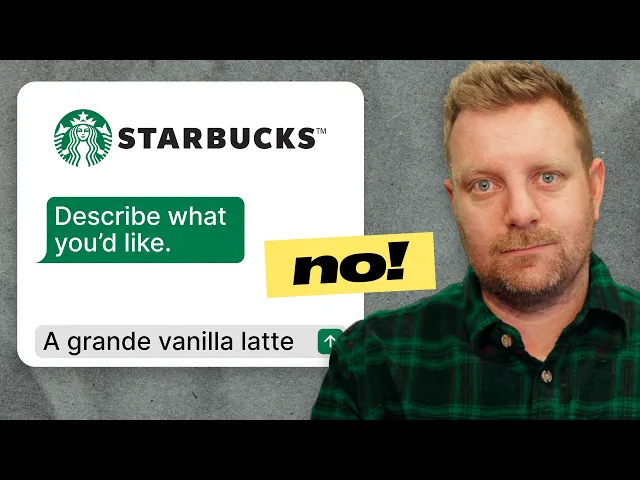
Browsers and UIs are dead. Everything is chat
SyntaxautoenpublicupdatedRead in about 3 minutes instead of watching 18 minutes.
Chat Is Not the Only Interface
- The speakers argue that claims like “the web is dead” or “chat is the final interface” are too simplistic; chat, websites, voice, and generated components all have different roles.
- They reject the idea that every website should simply add a chat bar, because users often want agents to connect to sites and services rather than chat inside every site.
- Cars are used as an example where a pure chat interface may be inappropriate, because drivers need fast, reliable controls while paying attention to the road.
Web MCP and Agentic Interfaces
- Web MCP is described as a way for websites to expose their actions as tools that agents can use, while still letting humans use the normal website UI.
- A grocery app example shows how actions like adding items, reordering, and marking items can be exposed to an agent through Web MCP.
- The preferred model is flexible: sometimes users click, sometimes they prompt, and sometimes the system should infer or generate the right interface.
When UI Still Matters
- Visual interfaces remain important for tasks like calendars, shopping, social media, and browsing, where users want to scan, compare, explore, or consume content.
- Inline chat components may work well for narrow workflows such as customer support refunds, but are unlikely to replace richer full-screen or specialized interfaces.
- Shopping is presented as an experience many users enjoy because discovery, filters, recommendations, and sales are hard to reduce to a single prompt.
Good Uses for AI Agents
- AI is most useful for annoying, repetitive work that people would rather delegate, such as categorizing expenses or adding calendar events from emails.
- The speakers distinguish between automating busywork and preserving experiences people actually enjoy, such as browsing stores, markets, or art.
- Connecting data across services is seen as a major strength of agentic systems, especially when that data is difficult to combine manually.
Business and Platform Risks
- The speakers worry that chat-based access could put the open web behind a few powerful companies that control visibility, ranking, and monetization.
- They note that companies may not want their brands and business flows reduced to APIs, especially where upsells and dark patterns are part of the existing experience.
- They expect providers and businesses may make deals to insert sponsored results or dark patterns into agent-driven experiences.
Generated UI and Personalization
- Generated UI may land between fully hand-designed interfaces and fully AI-created HTML: companies could provide components while agents arrange them for the user’s needs.
- The group questions whether an LLM or user can make a better interface than a company that deeply understands its own product and data.
- Personalized generated interfaces may be useful for specific user goals, but they still depend on users or systems knowing what is actually needed.
Smart Homes and Context
- Smart homes are presented as a strong use case because systems can use context such as cameras, humidity, light patterns, and recent events to suggest automations or dashboards.
- The ideal smart home could learn routines, turn lights on automatically, or surface the right control button at the right moment.
- The speakers remain cautious about whether AI can reliably learn patterns and make correct decisions, citing mixed experiences with navigation suggestions.
Conclusion
- The speakers conclude that chat and agentic UI are new surface areas for applications, similar to mobile and voice, rather than replacements for the entire web.
- They invite viewers to consider whether the web is truly dead or whether chat is simply another interface alongside existing ones.
Actiepunten
- Share your thoughts on whether the web is dead, whether everything will move into chat apps, or whether chat is just another interface.
Transcript
Ask video
Ask Video is a Plus feature
Upgrade to ask questions and get answers linked to exact moments.