How Ancient Humans Actually Kept Their Children Alive
autoenpublicupdated
Human Infants Are Unusually Helpless
Human babies are born far less developed than many other mammals and primates, unable to cling, walk, feed themselves, or survive alone.
The tradeoff for large human brains is that much brain development happens after birth, leaving infants highly vulnerable for years.
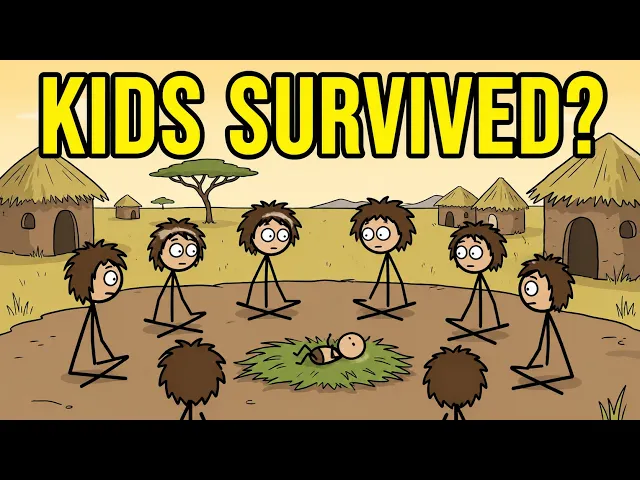
Child Survival Required Cooperative Care
Humans evolved as cooperative breeders, raising children through shared care rather than relying on one mother alone.
Studies of foraging groups show infants may be held by many different people throughout the day, with mothers providing only part of the direct care.
Fathers, older siblings, grandmothers, relatives, and neighbors all contributed to keeping babies protected and constantly attended.
Carrying Was Survival Technology
Because human babies could not cling to body hair like other primates, caregivers carried them constantly using arms, hides, and plant-fiber slings.
Being held calms infants through a biological transport response that lowers heart rate, stabilizes breathing, and reduces crying, which would have helped avoid predators.
Ancient Feeding Practices
Breastfeeding often lasted several years because breast milk was sterile, nutritionally complete, protective against infection, and the only reliable infant food.
Frequent nursing also delayed future pregnancies, spacing births in a way that improved survival odds.
Caregivers used premastication, chewing tough foods first and feeding them mouth-to-mouth to infants, possibly contributing to the evolutionary origins of kissing.
The Role of Grandmothers
The grandmother hypothesis argues that post-menopausal women helped human survival by foraging and feeding grandchildren.
Among the Hadza, older women were highly productive foragers whose support allowed mothers to care for new babies sooner.
The video frames menopause and long post-reproductive lifespans as an evolved strategy tied to child survival.
Modern Parenting Mismatch
For most of human history, parents had daily support networks of multiple caregivers, unlike many modern parents who raise children with little or no help.
The exhaustion and loneliness of modern parenting are presented as consequences of trying to do alone what humans evolved to do collectively.
The central conclusion is that human children survived because enough people shared responsibility for them.