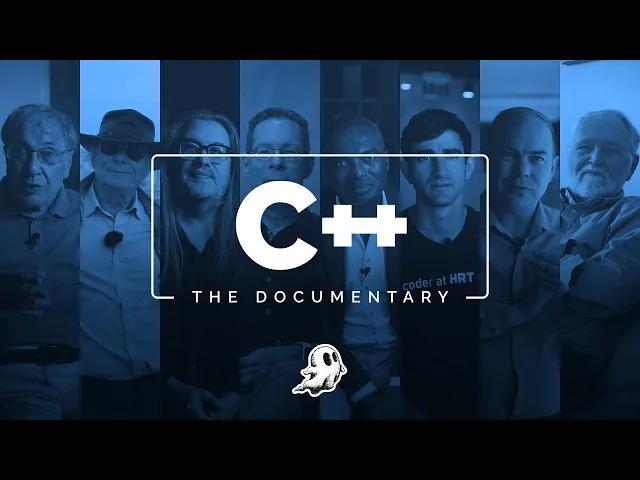
The Story of C++: The World's Most Consequential Programming Language | The Official Story
autoenpublicupdated
Origins and Motivation
C++ began from Bjarne Stroustrup's goal to combine low-level hardware control with Simula-style abstraction for large, complex systems.
Early programming environments were primitive, and advanced work often required assembly language that varied by hardware.
At Bell Labs, Stroustrup wanted to build a distributed Unix-based system but needed both C's systems-level control and higher-level modular structure.
Simula offered classes, type safety, and structure, but was too slow and resource-heavy, leading to C with Classes.
Bell Labs and Early C++
Bell Labs provided an unusual research environment where major computing advances such as Unix and C had already emerged.
C with Classes started as a C preprocessor so Stroustrup could write the code he needed, and other people soon began using it.
C with Classes was not enough of a leap from C, so Stroustrup built CFront, a compiler that translated C++ into C.
The name C++ was chosen because the C increment operator suggested an incremental improvement over C.
Commercialization and Growth
AT&T tried to commercialize C++ compilers, but limited investment and weak hardware sales allowed early implementations to spread relatively cheaply.
Stroustrup handled documentation, compiler work, implementation, and support himself during the early spread of the language.
C++ appealed because it let programmers think abstractly while retaining performance close to C.
CFront 2.0 exposed how critical compatibility was when a multiple inheritance bug nearly shipped in a way that would have been impossible to fix cleanly.
Community and Standardization
C++ needed adoption outside AT&T to succeed, and it spread through Usenet, magazines, talks, and developer enthusiasm rather than advertising.
Multiple vendor implementations caused incompatibilities, especially around templates, creating pressure for a common standard.
Representatives from major companies pushed Stroustrup to standardize C++ under ANSI rules to prevent fragmentation.
The Annotated Reference Manual became the foundation for standardization, adding major features such as templates, exceptions, and namespaces.
STL and the First Standard
Alexander Stepanov's Standard Template Library introduced a more rigorous model for containers and algorithms before C++ had a standard library.
The STL was initially considered too large and late for the standardization cycle, but its technical strength won support.
Stroustrup supported Stepanov's proposal and helped adapt the language and committee discussion around it.
STL became part of the standard despite opposition from major vendors and had a major influence on how C++ programmers write code.
C++ was standardized in November 1997 with namespaces, exceptions, templates, and the STL, helping serious companies adopt it.
Adoption Across Industries
C++ became important at CERN, where it replaced or complemented Fortran in high-energy physics software, data analysis, control, and visualization.
By around 2000, C++ had spread widely across companies and domains.
Game development adopted C++ because it provided organization, control, and performance for real-time systems.
Finance and high-frequency trading adopted C++ because small latency and performance differences could have major economic impact.
C++ Winter and Competition
The dot-com crash, Java's marketing, and Java's simpler object-oriented model contributed to a decline in C++ momentum in the early 2000s.
C# was created to combine Visual Basic-style ease of use with C++-like power and expressiveness for enterprise development.
The speakers argue that programming languages are tools for different domains, not winners in a single universal language war.
C++ remained strong where low-level systems, embedded work, and performance-sensitive applications were better fits than managed languages.
C++11 Renaissance
Around 2004, processor frequency scaling slowed, making efficient languages and parallel programming more important again.
C++ lacked standard threading support, leading to pressure on the committee to address concurrency and modern hardware realities.
Work on C++0x eventually became C++11 after a long standardization delay, pushed forward by committee leadership and community pressure.
C++11 added major features including move semantics, concurrency, auto, range-based for loops, smart pointers, lambdas, and constexpr.
After C++11, the committee moved toward regular three-year standard releases to avoid long gaps between standards.
Modern Complexity and Governance
Later standards such as C++14, C++17, C++23, and C++26 continued adding features, raising questions about complexity and where the language should stop growing.
Critics describe C++ as increasingly complex, and committee members acknowledge the difficulty of balancing many opinions and avoiding excessive additions.
The standards committee has grown dramatically, making consensus harder while also representing a broader community.
A key language-design challenge is that features can be added, but they are extremely hard to remove once adopted.
Current Importance and Future
Because so much infrastructure depends on C++, even small improvements can have large effects on society and industry.
C++ is described as being used roughly everywhere, including cameras, energy systems, cars, finance, games, AI infrastructure, and high-performance computing.
In AI and accelerated computing, Python often sits at the surface while optimized C++ and CUDA libraries do the heavy computation.
C++ developer numbers reportedly grew from 9.4 million in 2022 to 16.3 million in 2025, driven by demand for performance per watt.
Future challenges include funding, memory safety concerns, regulation, AI's influence, and the need for safer C++26 facilities.
C++26 is expected to include important safety improvements and static reflection, which speakers describe as highly impactful.
Stroustrup says he remains motivated by applications, users, and the responsibility to keep improving the language as the world changes.
Actiepunten
Upgrade from C++98-era compilers or mindset to modern C++ to prepare for the future.