Open YouTube

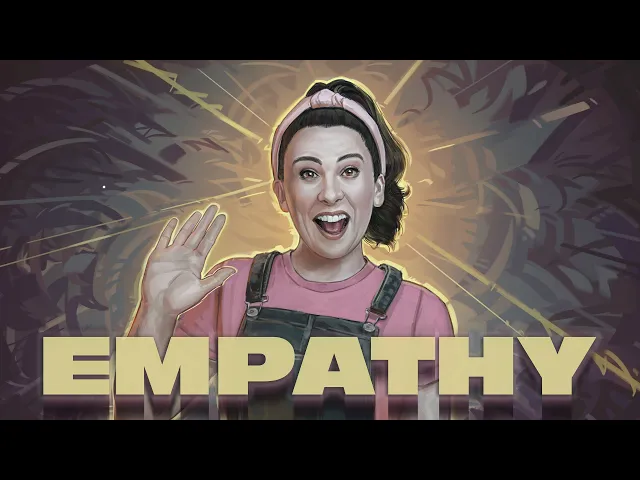
The Unforgivable Sin of Ms Rachel

Lindsay Ellisenglishenpublicupdated

Read in about 8 minutes instead of watching 142 minutes.

Ms Rachel and the backlash

  1. The video opens with the creator explaining that Ms Rachel is a regular part of her child’s mornings, then introduces accusations from StopAntisemitism calling for an investigation into Ms Rachel over alleged antisemitism.
  2. Critics accuse Ms Rachel of spreading misinformation, showing only one side of the Israel-Palestine conflict, and stepping outside the supposed proper role of children’s media.
  3. The creator argues that children’s educational media has never been apolitical, pointing to Mr. Rogers and public television as examples of programs built around social and moral concerns.

Ms Rachel’s work and politics of children’s media

  1. Ms Rachel began making videos after seeking speech therapy for her child and finding few quality online resources for early language development.
  2. Her videos are designed for very young children and caregivers, often explaining milestones, parenting suggestions, and why certain teaching techniques are used.
  3. The video contrasts Ms Rachel’s research-informed, caregiver-engaged format with more passive children’s entertainment.
  4. The creator traces earlier backlash against Ms Rachel, including false claims about pronouns and outrage over collaborator Jules, a nonbinary trans person.
  5. Ms Rachel’s May 2024 Cameo fundraiser for Save the Children included Gaza as one of several hunger-related regions, which led to bullying and a more sustained public advocacy from her.

Sesame Street, SEL, and conservative backlash

  1. The video explains that Sesame Street was created to reduce early childhood education gaps and was backed by research on how children learn through television.
  2. Sesame Street later expanded from academic basics to feelings, death, divorce, homelessness, race, culture, and community, which the creator frames as a natural evolution of educational media.
  3. The creator argues that social and emotional learning is supported by research and is intertwined with language, cognition, and academic success.
  4. Right-wing critics portray SEL as indoctrination, connecting it to CRT, social justice, privacy invasion, and attacks on family or faith.
  5. The video uses opposition to SEL to argue that attacks on empathy in children’s education are part of a broader political project.

Bent Key and anti-woke children’s media

  1. The creator discusses Bent Key, the Daily Wire’s children’s streaming service, as a conservative response to supposedly woke kids’ content.
  2. She argues Bent Key treats screen time as a babysitting tool rather than something caregivers should engage with alongside children.
  3. The video compares Bent Key’s Mabel McClayley to Mr. Rogers and Ms Rachel, criticizing it as preachy, less child-centered, and focused on telling children how to behave rather than helping them process feelings.
  4. The creator argues that Mr. Rogers, Blue’s Clues, and Ms Rachel work because they speak at the child’s level and affirm the child’s worth, while Mabel lacks that relational focus.

Empathy as a political target

  1. The video argues that many right-wing figures have shifted from claiming to be more compassionate to treating empathy itself as dangerous, manipulative, or weak.
  2. The creator rejects the idea that empathy means blindly giving in, using a parenting example to distinguish validating a child’s feelings from abandoning boundaries.
  3. She argues that progressive appeals to empathy are usually appeals to basic human dignity, not calls to treat every feeling or demand as equally valid.
  4. The video criticizes Christian arguments against empathy, including claims that empathy is toxic, sinful, or a tool of the devil.
  5. The creator connects anti-empathy rhetoric to hostility toward immigrants, trans people, Palestinians, reproductive rights, and women’s political judgment.

Jewish, Muslim, and Christian history

  1. The video gives a compressed history of the First and Second Temples, the Babylonian exile, Roman rule, the destruction of Jerusalem, and the beginning of the Jewish diaspora.
  2. It explains that Islam emerged centuries later and that Jews, Christians, and Zoroastrians were generally treated as people of the book under many Muslim rulers, though oppression still occurred at times.
  3. The creator argues that the idea of an eternal Jewish-Muslim blood feud is historically false and that much historic violence against Jews came from Christian societies.
  4. The video summarizes Christian theology around Jesus as the ultimate sacrifice, then discusses competing ideas of universal salvation versus salvation limited to believers.

Christian Zionism and Israel

  1. The video explains how Left Behind helped popularize pre-tribulational dispensational premillennialism among American evangelicals.
  2. The creator describes dispensationalism as a belief in biblical eras leading toward end-times events, including rapture, tribulation, and a millennial reign of Christ.
  3. She argues that Christian Zionism treats the modern state of Israel and the gathering of Jews there as signs of the end times.
  4. The video says American evangelical support for Israel is often stronger and more uniform than Jewish support, which is diverse and includes anti-Zionist religious positions.
  5. The creator argues that scripture is often selectively used to justify political goals people already want to pursue.

Antisemitism and political misuse

  1. The video defines major antisemitic tropes, including Jews controlling money, media, global power, blood libel, and the claim that Jews killed Jesus.
  2. The creator argues that parts of Christian tradition and New Testament interpretation helped fuel centuries of antisemitism in Europe.
  3. She says criticism of Israel is not inherently antisemitic, though antisemitism can be mixed into activism and confusion is common because powerful actors deliberately blur the issue.
  4. The video argues that Netanyahu’s government and allies conflate Zionism with all Jews, making criticism of Israel appear to be criticism of Jews generally.
  5. Examples are given of politicians and media figures labeling anti-Israel or pro-Palestinian Jews as self-hating or ignorant.

Project Esther and crackdowns on speech

  1. Project Esther is described as a Heritage Foundation-linked strategy that presents itself as fighting antisemitism while targeting the pro-Palestinian movement.
  2. The video says Project Esther seeks to portray pro-Palestinian advocacy as terrorism, national security threat, and antisemitism, despite lacking endorsement from major Jewish organizations.
  3. The creator argues that terms like Hamas Support Organization and terrorism support entity are designed to smear critics of the Israeli government and expose activists to legal consequences.
  4. The video links these ideas to visa cancellations, arrests, university funding threats, and pressure on institutions such as Harvard, Columbia, USC, and NYU.
  5. The creator argues that suppressing speech in the name of protecting Jews risks making Jews appear to be the face of authoritarian power, which can fuel antisemitism rather than reduce it.

Genocide, Rwanda, and international failure

  1. The video explains the origin of the term genocide, Raphael Lemkin’s role, and the 1948 Genocide Convention’s obligation to prevent and punish genocide.
  2. The creator uses Rwanda to show how colonial racial theories and identity documents hardened Hutu and Tutsi categories before the 1994 genocide.
  3. She summarizes the Rwandan genocide as a planned, rapid mass killing enabled by propaganda, dehumanization, armed civilians, and international abandonment.
  4. The video argues that genocide requires structures: authoritarian leadership under threat, mass dehumanization, and a complicit or inactive international community.
  5. The creator compares U.S. reluctance to use the word genocide during Rwanda with current evasions around Gaza, because the term carries legal and political obligations.

Bystanders, perpetrators, and rescuers

  1. The video describes how the Berlin Psychoanalytic Institute adapted to Nazi rule, excluded Jews, and eventually became part of the Nazi medical system.
  2. Research by Kristen Renwick Monroe is used to distinguish rescuers, bystanders, and perpetrators during genocidal systems.
  3. Rescuers are described as people whose self-image includes all human beings as equally worthy, while perpetrators see themselves as defending an in-group under threat.
  4. Bystanders are portrayed as the majority, motivated by safety and material stability, and capable of drifting into complicity when systems demand it.
  5. The creator argues that in genocidal politics, moderate or dissenting members of an in-group can also become targets because they undermine the dominant narrative.

Numbers, stories, and Gaza

  1. The creator reflects on the limits of numbers in describing mass suffering, using Schindler’s List, Hotel Rwanda, the Talmud, and the Quran to emphasize the value of saving one life.
  2. She argues that casualty numbers are necessary but inadequate because they can create emotional distance and cannot fully measure suffering.
  3. The video criticizes both exaggerated atrocity propaganda and dismissive reactions to corrected numbers, arguing that even one murdered child is intolerable.
  4. The creator says Ms Rachel’s focus on individual Palestinian children makes suffering tangible in a way statistics alone cannot.
  5. Rahaf, a three-year-old double amputee evacuated from Gaza, is presented as an example of why personal stories matter and why the creator identifies the suffering of Gaza’s children with her own children’s vulnerability.

Closing argument

  1. The creator argues that attacks on empathy, children’s media, SEL, and pro-Palestinian advocacy are connected by a desire to raise obedience rather than autonomous, emotionally healthy people.
  2. She says Gaza is not the only mass humanitarian crisis, pointing to Sudan and Darfur, but argues that this does not lessen the need to respond to Gaza.
  3. The creator admits there is no simple list of actions that will stop famine or killing, because powerful people would need to make different choices.
  4. She insists that limited ability is not the same as having no responsibility, and that people should do what they can, including donating and sustaining public pressure.
  5. The video ends by emphasizing that adults are supposed to protect children, teach them healthy ways to express feelings, and act in ways that help their neighbors.

Actiepunten

  1. Donate to the fundraiser linked at the bottom of the video, which the creator says helped evacuate Rahaf from Gaza.
  2. Keep public attention on Gaza and continue pushing back against restrictions on speech and pro-Palestinian activism.
  3. Do what you can locally and for children affected by war, even if the impact is limited.